Do you know the difference between running expenses and occupancy expenses? Are you familiar with the various methods for claiming home office expenses on your taxes? As remote work becomes more prevalent, understanding how to claim home office expenses has become increasingly important.
To ensure you’re maximizing your tax deductions while remaining compliant, this blog post will serve as a comprehensive guide on claiming home office tax deductions in 2023.
Whether you’re self-employed or a remote employee, claiming home office expenses can be a great way to reduce your taxable income. However, navigating the complex tax landscape can be overwhelming.
Read on to learn everything you need to know about claiming home office expenses, from understanding the different types of expenses to the various methods for claiming them.
Short Summary:
- Understand what costs are deductible for tax purposes and the two main types of home office expenses: occupancy and running expenses.
- Know eligibility criteria, methods for claiming deductions (fixed rate or actual cost method), additional claims such as internet/phone expenses, record-keeping & documentation requirements to maximize savings.
- Keep records for at least 5 years to stay compliant with tax requirements when claiming home office expense deductions.
Understanding Home Office Expenses
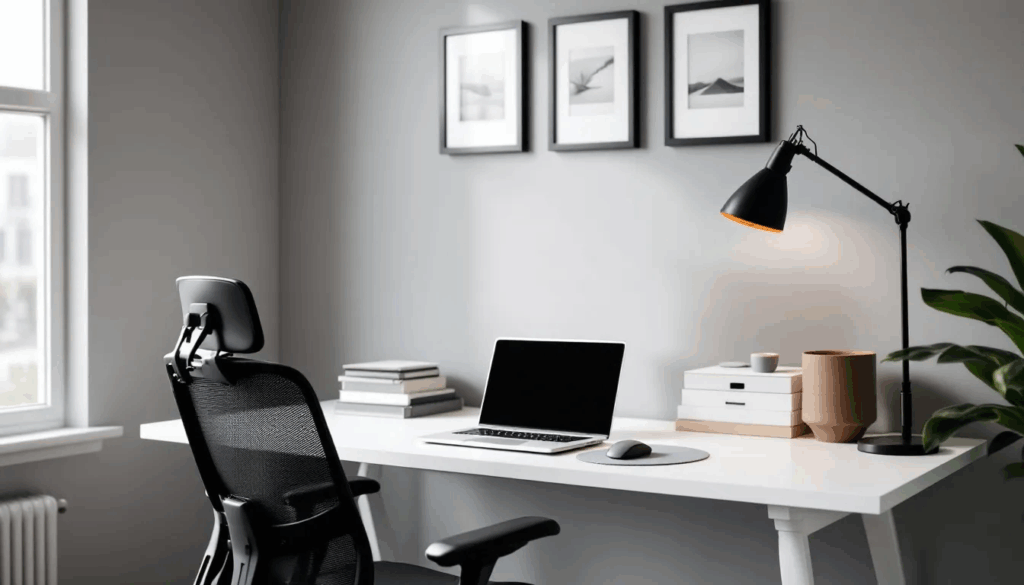
Home office expenses refer to the costs associated with running a business from home, including rent, utilities, and home office equipment.
By understanding what is and isn’t deductible, you can maximize your tax deductions while ensuring you don’t overclaim. These expenses can be categorized into two main types: occupancy expenses and running expenses.
Occupancy expenses relate to the ownership or rental of the home office, such as mortgage interest, rent, council rates, and taxes. You can claim expenses only for the work-related proportions of household costs if you work from home regularly.
Running expenses, on the other hand, are the ongoing costs of operating the home office, including electricity, gas, internet, depreciation of office furniture, and stationery expenses.
It’s important to note that not all home office expenses can be claimed as tax deductions. Certain expenses, such as utilities, repairs, and maintenance, are not eligible for deduction.
In order to claim these expenses, they must be directly related to income producing activities, such as networking, projects that generate passive income, investing in stocks or real estate, and engaging in revenue-generating activities like advertising, prospecting, selling, and closing.
Types of Home Office Expenses
As mentioned earlier, home office expenses can be divided into occupancy expenses and running expenses. Occupancy expenses include costs associated with the ownership or rental of the home office, such as mortgage interest, rent, council rates, land taxes, and house insurance premiums. These expenses are generally considered significant business expenditures following payroll.
On the other hand, running expenses refer to the ongoing costs of operating the home office. This category includes electricity, gas, internet, depreciation of office furniture, stationery expenses, cleaning, and repair costs.
To calculate the proportion of these expenses associated with generating income, you must determine the number of hours dedicated to income producing activities and divide that by the total cost of the item.
If you share a room with others or use it for multiple purposes, you can claim expenses only for the hours you had exclusive use of that area. It’s crucial to maintain accurate records of these expenses and the time spent on income producing activities to ensure you’re claiming the correct amount of deductions on your taxes.
What You Can't Claim In Your Tax Deductions
While it’s essential to maximize your tax deductions, it’s equally important to know what you can’t claim. Occupancy expenses, such as mortgage interest, rent, rates, and home insurance, are not eligible for deductions as home office expenses.
Additionally, utilities, repairs, and maintenance cannot be claimed as tax deductions. By being aware of these limitations, you can avoid overclaiming and potential issues with the tax authorities.
Income Producing Activities
Income producing activities are actions that have the potential to generate revenue or income for an individual or business. Examples include networking, undertaking projects that can generate passive income, investing in stocks or real estate, and engaging in revenue-generating activities such as advertising, prospecting, selling, and closing.
These activities can generate revenue or income by offering goods or services that customers are willing to purchase. It’s important to engage in income producing activities to maximize your tax deductions and ensure you’re making the most of your home office expenses.
Eligibility Criteria for Claiming Home Office Expenses

To claim home office expenses, there are several eligibility criteria to consider. First, you must be engaged in income producing activities, as previously discussed. Next, you need to determine the work-related portion of your home office expenses. This includes items such as office supplies, equipment, phone and internet costs, and computer consumables.
Lastly, you may need to consider occupancy expenses, such as mortgage interest, rent, council rates, land taxes, and house insurance premiums.
These expenses can be allocated based on the floor area of your home office. Keep in mind that personal circumstances and tax legislation can vary, so it’s always a good idea to consult with a registered tax advisor or the Australian Taxation Office (ATO) to determine your eligibility and the best methods for claiming your home office expenses.
Work-Related Portion
The work-related portion of your home office expenses is a crucial factor in determining your eligibility for tax deductions. This includes expenses directly associated with work, such as office supplies, equipment, phone and internet expenses, and computer consumables.
Expenses not directly associated with work, including rent, mortgage interest, and utilities, are not included in the work-related portion.
To calculate the work-related portion of home office expenses, you must subtract any expenses that are not directly related to work from the total amount of home office expenses.
This will ensure you’re only claiming the portion of expenses that are directly related to your income producing activities, minimizing the risk of overclaiming and potential issues with tax authorities.
Occupancy Expenses
Occupancy expenses are costs associated with the ownership or rental of your home office, including mortgage interest, rent, council rates, land taxes, and house insurance premiums. These expenses can be significant and may be eligible for tax deductions if you meet the criteria for claiming home office expenses.
Be sure to keep accurate records of these expenses and consult with a registered tax advisor or the ATO to determine your eligibility and the best methods for claiming occupancy expenses.
Methods for Claiming Home Office Expenses

There are two primary methods for claiming home office expenses: the fixed rate method and the actual cost method. The fixed rate method enables you to cover 67 cents per hour for working from home.
This includes expenses like rent and utilities. The actual cost method involves claiming the costs that were actually incurred for operating a home office, such as rent, utilities, and equipment.
Each method has its advantages and disadvantages, so it’s important to consider which method best suits your personal circumstances and record-keeping abilities.
For example, using the fixed rate method, you could claim 67 cents for each hour worked from home, covering expenses such as utilities and rent.
On the other hand, using the actual cost method, you could claim the expenses incurred for operating a home office, including rent, utilities, and equipment. It’s important to weigh the pros and cons of each method and choose the one that best fits your situation and record-keeping abilities.
Fixed Rate Method
The fixed rate method is a simpler option for claiming home office expenses. From 1 July 2022, the fixed rate method allows you to claim 67 cents per hour for the duration you work from home, covering additional running expenses such as utilities, rent, and the depreciation allowance for office furniture and technology.
The fixed rate method’s coverage for 2022-23 includes internet, phone, electricity, gas, stationery and computer consumables. This method requires you to maintain records of hours worked and does not necessitate a designated workspace.
Certain expenses, such as depreciation expenses, can be deducted separately using the fixed rate method. Reimbursement for mobile phone and internet costs can be requested.
Furthermore, computer consumables and stationery may be included in the claim. The fixed rate method offers a straightforward approach to claiming home office expenses, making it an attractive option for those who prefer simplicity and ease.
Fixed Rate Method Example
Let’s say you work from home for 10 hours per week. Using the fixed rate method, you could claim 67 cents per hour, totaling $6.70 per week for expenses such as utilities and rent. Over the course of a year, this would amount to $348.40 in home office expense deductions.
This example demonstrates the simplicity of the fixed rate method, allowing you to easily calculate your deductions without extensive record-keeping.
Actual Cost Method
The actual cost method, on the other hand, involves claiming the actual expenses incurred for operating a home office, such as rent, utilities, and equipment.
This method requires more detailed record-keeping and documentation compared to the fixed rate method, as you must maintain records of all receipts and invoices, along with time tracking records.
To use the actual costs method, you must calculate the work-related proportion of household expenses based on your using area. However, the actual cost method can potentially result in larger tax deductions if your home office expenses are significantly higher than the fixed rate amount.
Using the actual cost method, you would need to calculate the difference between the costs of running a home office and the costs of operating a business from a traditional office, including expenses such as electricity, heating, internet, phone, and other associated costs.
This method may be more suitable for those with higher home office expenses or those who prefer a more accurate representation of their expenses.
Actual Cost Method Example
Suppose you incur an expense of $200 for electricity for your home office and $100 for electricity for your traditional office. Using the actual cost method, you would be eligible to claim the difference of $100 as a tax deduction.
Similarly, if you incur an expense of $75 for internet for your home office and $50 for internet for your traditional office, you would be eligible to claim the difference of $25 as a tax deduction.
This example demonstrates the precision of the actual cost method, allowing you to claim deductions based on your specific expenses.
Additional Running Expenses and Claims

In addition to the expenses covered by the fixed rate and actual cost methods, there are additional running expenses that can be claimed separately, such as internet and phone expenses.
These expenses can be significant and may be eligible for tax deductions if you meet the criteria for claiming home office expenses.
Be sure to keep accurate records of these expenses and consult with a registered tax advisor or the ATO to determine your eligibility and the best methods for claiming additional running expenses.
As previously mentioned, you may be eligible to reclaim internet and phone expenses as additional running expenses.
To calculate the work-related portion of these expenses, you can divide the total number of hours spent on work-related activities by the total number of hours spent using the internet or phone.
This will ensure you’re claiming the appropriate portion of these expenses as tax deductions.
Internet Expenses

Internet expenses for a home office may include fees for an internet service provider (ISP), rental fees for a modem or router, and any necessary equipment or software required for internet access for work-related purposes.
To calculate the percentage of internet use that is related to work, you can divide the total number of hours spent on work-related activities by the total number of hours spent using the internet.
For example, if you spend 20 hours per week on work-related activities and a total of 40 hours per week using the internet, your work-related internet use would be 50%. You can then multiply this percentage by the total cost of your internet expenses to determine the amount you can claim as a tax deduction.
Phone Expenses
Phone expenses for tax deduction include the cost of business phone calls made from mobile or landline phones, mobile phone equipment, and mobile phone plans.
If the cost of the phone is less than $300, you can claim the business percentage of that amount as a one-off tax deduction. If it is greater than $300, you may be able to claim the expense over a number of years.
To calculate the work-related portion of your phone expenses, you can divide the total number of hours spent on work-related calls by the total number of hours spent using the phone. This will ensure you’re claiming the appropriate portion of your phone expenses as tax deductions.
Remember to maintain accurate records of your phone expenses and consult with a registered tax advisor or the ATO to determine your eligibility and the best methods for claiming phone expenses.
Record-Keeping and Documentation

Maintaining accurate records and documentation is essential for successfully claiming home office expenses tax deductions.
By keeping track of all receipts, invoices, and time spent working from home, you’ll be better prepared to substantiate your expenses and deductions to the tax authorities.
Evidence of additional costs must be available to authenticate home office expense claims. Detailed record-keeping can also help you identify potential areas for savings and ensure you’re maximizing your tax deductions.
In addition to retaining receipts and invoices, it’s important to track the time you spend working from home.
This is particularly crucial for those using the fixed rate method, as the number of hours worked directly affects the amount of the deduction.
You can use time tracking apps or software, or manually record your hours using paper timesheets or spreadsheets. Be sure to keep these records for at least five years to comply with tax requirements.
Receipts and Invoices
When claiming home office expenses, it’s crucial to retain all relevant receipts and invoices.
These documents serve as proof of your expenses and can be invaluable in the event of a tax audit. In addition to physical receipts and invoices, you can also keep photos or scans of these documents on a cloud-based storage service.
This will help ensure your records are secure and easily accessible if needed.
It’s also important to maintain documentation of your expenses, such as rent, utilities, repairs, and supplies, as well as any income you receive from your home office. By keeping accurate records, you’ll be better positioned to claim the appropriate deductions on your taxes and minimize the risk of overclaiming or underclaiming.
Time Tracking
Time tracking is an essential component of claiming home office expenses tax deduction, as it enables you to accurately document the time spent working in your home office.
This is necessary to fulfill the tax requirement of proving exclusive business use of the home office for qualification of the deduction. There are several methods for tracking time, ranging from using time tracking apps or software to manually recording your hours on paper timesheets or spreadsheets.
Whichever method you choose, it’s important to consistently track your time and maintain accurate records.
This will not only help you calculate your home office expenses tax deduction, but also provide valuable insights into your productivity and time management, ultimately enabling you to make more informed decisions about how to allocate your time and resources.
How Long Do You Need To Keep Records
For tax compliance, it’s essential to retain your records for a minimum of five years to substantiate your expenses and deductions to the tax authorities.
This includes documentation of all home office expenses, such as rent, utilities, repairs, and supplies, as well as any income you receive from your home office.
Failure to keep records of home office expenses could lead to an inability to claim them as deductions on taxes, resulting in higher taxes than necessary.
By maintaining organized, accessible records, you can ensure you’re maximizing your tax deductions and staying compliant with tax requirements.
Conclusion
Claiming home office expenses can be a complex process due to varying personal circumstances and changing tax legislation.
By understanding the different types of expenses, the various methods for claiming them, and the importance of record-keeping and documentation, you’ll be better prepared to navigate the tax landscape and maximize your deductions.
As you embark on this journey, remember that you don’t have to navigate it alone. Consider seeking professional help from a registered tax advisor or the Australian Taxation Office (ATO) to ensure you’re accurately claiming your home office expenses and staying compliant with tax requirements.
With the right knowledge and support, you can confidently claim your home office expenses and enjoy the benefits of a reduced taxable income. Want to better understand your potential tax obligation this financial year use this tax refund calculator to create some home office scenarios for yourself.
Frequently Asked Questions
What items can I expense for home office?
When working from home, you can claim various expenses such as energy costs, cost of repairs, cleaning expenses and equipment necessary for the home office. These items can be deducted to minimize your tax burden.
What are the most common home office expenses?
Working from home often requires additional expenses to maintain a professional working environment, such as equipment, repairs, cleaning services, and utilities.
These are the most common home office expenses that must be accounted for in order to create a successful workspace.
What is the ATO rate for home office running expenses?
The ATO rate for home office running expenses for the 2022-23 tax year is 67 cents per business hour. This rate covers all additional running expenses incurred from working from home, such as furniture and furnishings depreciation.
Can I claim a home office on tax?
Yes, you can claim a home office on tax if you have an area of your home set aside for business purposes and incur occupancy and running expenses. The best way to claim home office tax deductions is through the revised fixed rate method which combines most work from home tax deductions and allows you to claim 67 cents per hour worked from home.
What is the 80 cent method for home office?
The 80 cent method is a simple and easy way to calculate home office expenses for those who work from home. This shortcut method allows workers to claim a flat rate of 80 cents for every hour they work from home, without needing to provide additional supporting evidence. The ATO introduced this temporary 80 cents per hour shortcut method for claiming home office expenses during the COVID-19 crisis.
This option streamlines the claiming process and eliminates any additional costs associated with working from home. The temporary 80 cents per hour method covered all running costs related to working from home from 1 March 2020 to 30 June 2022.